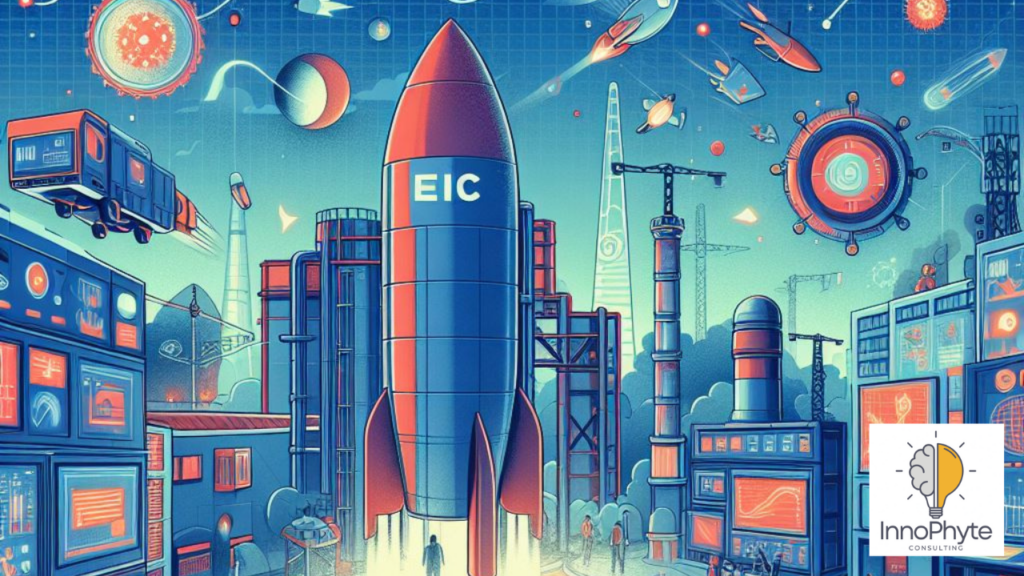

Opportunity, Risk and the Human Factor
Artificial intelligence (AI) is no longer a future concept in agriculture. It’s thought to be reshaping actively how food is grown today. But our research suggests that growers, and regulators remain cautious while unsurprisingly, technology suppliers are sanguine. But the potential is there – in controlled environment agriculture (CEA), where technology is a critical success factor, AI is accelerating innovation even further.
From predicting plant needs before issues arise, to automating daily operations and improving sustainability outcomes, AI is redefining what’s possible in indoor and urban growing systems. But who owns decisions and how AI integrates into wider system activities remain key unanswered questions.
What does AI in CEA really mean?
After attending Fruit Logistica 2026, it’s clear from multiple conversations with decision-makers that AI in CEA is red hot. But it appears that everyone has a different definition for the phrase.
CEA systems are carefully managed through automation and grower experience, with adjustments to light, temperature, humidity, nutrients, and airflow optimal growing conditions. AI builds on this control by analysing immense volumes of real-time and historical data. Insights generated allow systems to learn, adapt, and optimise continuously.
Instead of static rules and fixed schedules, AI enables dynamic, responsive environments that evolve alongside new cultivars, plant growth and external conditions. Yet further opportunities exist – in supply chain management and integration into third-party systems, in energy trading, and in labour force planning. And beyond these considerations, there are activities where businesses are currently integrating AI: in CRM, workflows and ongoing operations.
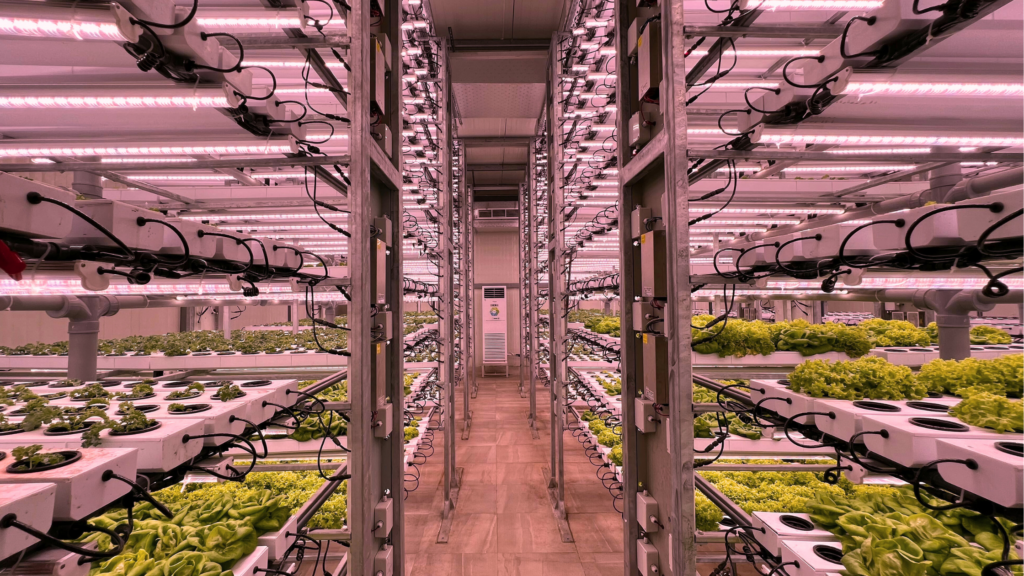
Focus Areas for AI in CEA
In the context of optimising productivity in the farm, we consider five possible uses of AI that are either being deployed now or offer real, short-term opportunities for growers to squeeze extra margin out of existing operations.
1. Intelligent Climate Control
AI models analyse sensor data to predict the ideal environmental conditions for each crop and growth stage. Systems can automatically adjust lighting, temperature, and CO₂ levels, improving consistency while often reducing energy use. If integrated with real-time environmental sensing, preferred system settings can be continuously updated.
2. Early Detection of Plant Stress and Disease
Computer vision (CV) allows AI to identify subtle changes in plant appearance, such as colour shifts or leaf shape irregularities, long before symptoms become obvious to the human eye. CV supports earlier intervention, reduced crop loss, and more-targeted treatments, and has the potential to make a significant, low-cost impact on grower behaviour.
3. Growth Forecasting and Yield Prediction
Machine learning models can estimate growth rates, harvest windows, and final yields based on environmental patterns and plant responses.. This approach will be critical for integrating retailers and distributors into grower activities. The result should be reduced waste, better working capital efficiency and margins.
4. Automation and Robotics
AI-powered robotics are increasingly used for tasks such as seeding, transplanting, harvesting, and packaging. Automation helps reduce labour pressure, where labour remains the highest operating cost within the industry (except maybe energy, depending on facility design). Improved consistency should help increase Grade 1 product and simultaneously support scaling up of operations.
5. Smarter Resource Use
AI optimises irrigation, nutrient delivery, and lighting strategies to reduce resource use while maintaining or improving productivity. Growers can tailor their input use to manage margins and end-demand. We expect AI in this context to deliver significant reductions in water, energy, and fertiliser consumption.
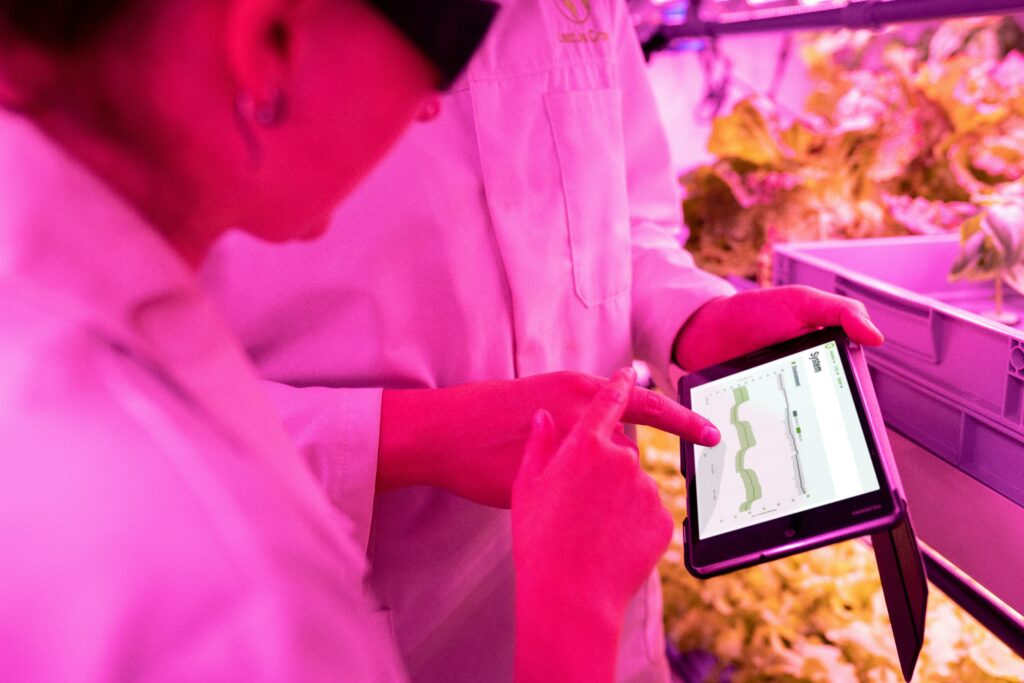
The AI Upside
While nascent, AI-enhanced CEA offers a number of routes to improved productivity, better resilience and credible sustainability claims. While productivity in CEA is already significantly above broadacre farming, yield potentials remain higher still. Closing the gap offers a route to better productivity and space use efficiency. Meanwhile, evidence for climate-related disruption to fragile supply chains is already evident in horticulture. Spain, Morocco and Portugal have all been hit by droughts, floods and heatwaves in recent years, with visible effects in UK supermarkets – shelves empty of peppers or cucumbers are now a regular sight. S:
Improving supply-chain resilience will be helped by better planning, and this is an area where AI offers huge opportunities. By aligning orders to actual planting, tempered by medium-range weather forecasts and forward energy pricing, growers can match inputs to outputs. Clearing mechanisms for predicted demand-supply mismatches should (through arbitrage) reduce system-wide waste everywhere, from grower to retailer to customer fridge.
One clear outcome that can be targeted by use of AI is to identify areas for improved sustainability. This could be as simple as matching fertiliser demand to nutrient supply or energy demand management based on forward pricing and energy mix. Better understanding of the interactions of light, temperature, humidity and airflow will help predictive models optimise across these variables. And AI-driven disease modelling can support Integrated Pest Management and reduced pesticide / fungicide use.
Overall, where AI is implemented sensibly and with targets aligned to grower needs, we expect the result to be better overall food security and a timely focus on local / regional supply.
These benefits are already being realised, and the pace of adoption continues to accelerate.
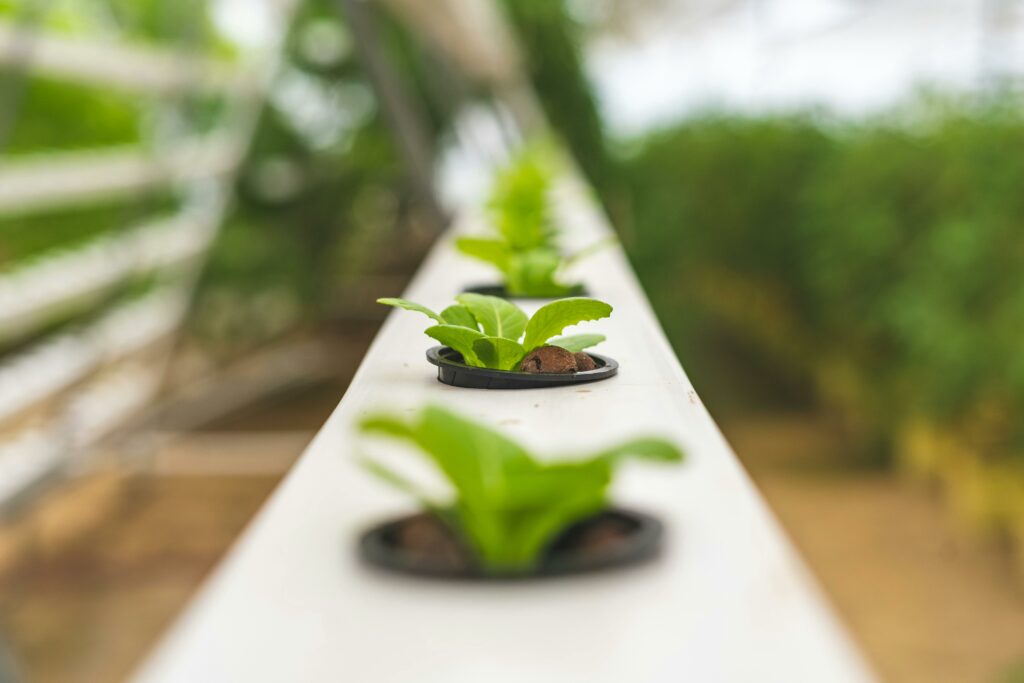
Challenges to Navigate
While the potential is huge, challenges remain. Notwithstanding the risks to national security from AI being run and data being stored overseas, we identify a number of areas that either trouble growers already, or really should do.
- Although there is pressure on growers to invest in new technology, there remain significant barriers: high initial investment for infrastructure / technology mean only well-financed operations can compete. A winner-takes-all environment is not conducive to system resilience and food security. A further risk is that retailers will take the lead and insist suppliers engage with their demand and supply chain management AI, further pushing risk onto growers who compete for these contracts.
- AI relies on enormous datasets that may need annotation and certainly need to be of high enough quality for effective training to take place. Businesses may fail to be diligent enough, and the downstream effect is likely to be incorrect interpretations of data by AI. Furthermore, mechanistic descriptions are rare in this field, so growers face ‘Black Box’ outputs from AI. And AI hallucinations are a feature, and are unlikely to be designed out by ingesting further training data at Anthropic or Google. Overall, it remains essential to have a human in the loop throughout the process of designing, testing, implementing and monitoring AI. The cost of failure in a low-margin business like CEA is incredibly high.
- While AI promises to deliver transformational changes, they are being implemented into operations run by humans. While the Board may want a new whizzy system to impress their investors, workers faced with new systems may work around them rather than with them. If this wasn’t problem enough, novel AI implementations must be integrated into existing software. Integration will remain an issue for many years, and we expect imperfectly specified attempts to create new workflows will founder if existing systems are not incorporated into the design process.
- Just like Donald Rumsfeld’s ‘Unknown unknowns’, the level of skills gaps in data analysis and system management are not only unclear, but their extent and impact are also uncertain. A whole new field of employment is opening up, but those with the appropriate skills and experience may be hard to find and expensive to employ.
- As noted earlier, if AI investments become winner-takes-all, there is a significant risk around access and equity. By this we mean the ability of smaller growers to benefit from a transformational technology even where the willingness exists. Other considerations abound: How will AI affect employment for operatives? Will businesses be willing to invest in upskilling their workers? Will these investments increase food prices at a time of stagnant incomes? . There are a number of areas where policy direction and regulation would potentially help the entire industry. From a UK perspective, the government is inclined to get involved in industrial policy, but agriculture generally, and horticulture specifically is the poor cousin. The EU has recently regulated AI in food systems (and more widely) in the 2025 AI Act. This gives some comfort, but the practical effects are yet to be felt.
- Almost everywhere we have talked to growers, regulators, financiers and suppliers, the narrative has been the same. AI appears attractive, and could be a transformational tool. But it remains essential that humans remain ‘in the loop’. On the basis that the grower not the supplier of AI technology will be blamed for failure, unsurprisingly those actually operating CEA facilities insist on final grower decisions based on AI support. This is not a surprising outcome, but will put a limit on how much AI is actually allowed into operations.
Progress will depend on collaboration between growers, technologists, researchers, investors and policymakers and on continued knowledge-sharing across the sector. We must be clear-eyed in the face of risks, but alive to the opportunities as well.
Looking Ahead
AI is not about to replace growers whose know-how and experience remain critical to successful CEA operations. With a human-in-the-loop, AI can enhance expertise and improve operational efficiency. Done carefully, the result could be more resilient and sustainable food systems. As CEA continues to evolve, AI is likely to play an increasingly central role in how we grow food in controlled environments.
Recent discussions at Fruit Logistica and in our research has highlighted just how quickly digital integration, automation, and AI-led optimisation are moving from concept to commercial reality. Across the exhibition floor and conference sessions, one theme was clear: data-driven agriculture is no longer emerging, it is here, now, and adoption is accelerating.
For businesses operating in controlled environments, making informed decisions that account for all stakeholders is essential.

Dr. Jim Stevens
Senior Innovation Consultant
Hello, I am Jim, one of the consultants at InnoPhyte Consulting! My background is spanning from wine trade, finance, and plant science. I can support you with with funding, grant writing, experimental design, data analysis and much more.
If you need to pick my brains, feel free to get in touch at jim@innophyte.co.uk
Grant and Science Support
Data Analysis
Data Visualisation
Project Manager
Expert Interview Services
How can we support your business?
This site is protected by reCAPTCHA and the Google Privacy Policy and Terms of Service apply.
INNOPHYTE.CO.UK
Oxford House Cliftonville Northampton NN1 5BE